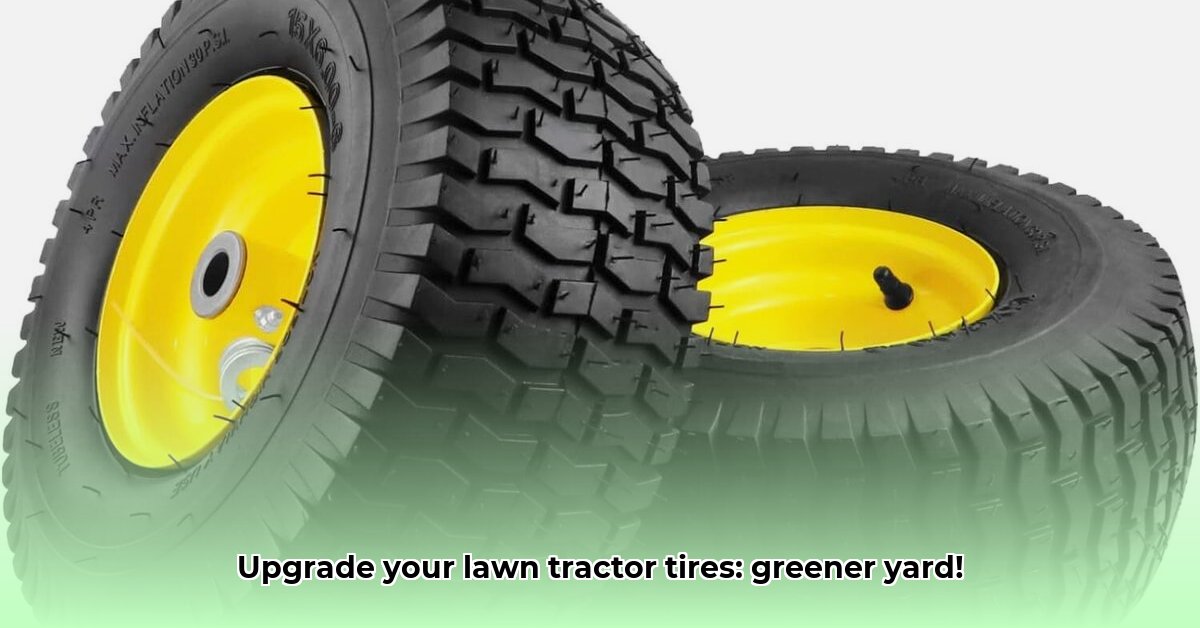
Understanding the Importance of Your Lawn Tractor's Rolling Stock
Your lawn tractor's tires and wheels are often overlooked, yet they significantly impact your lawn's health and the sustainability of your landscaping practices. They directly influence soil compaction, fuel efficiency, and the overall longevity of your equipment. Choosing the right tires and implementing proper maintenance significantly improves your lawn's health and reduces your environmental footprint. Did you know that improper tire inflation can lead to up to 20% more fuel consumption? For more information on choosing the right tires, check out this helpful resource: Craftsman Lawn Tractor Tires.
Choosing the Right Tires: A Crucial Decision for a Healthy Lawn
Selecting the appropriate tires for your lawn tractor is crucial for minimizing soil compaction and maximizing efficiency. Several tire types cater to different needs:
Turf Tires: (Wide, low-pressure tires designed to minimize soil compaction) These are ideal for delicate lawns, distributing weight evenly to prevent ruts and root damage. Their large contact area with the ground minimizes soil disturbance, promoting a healthier lawn.
All-Terrain Tires: (Tires providing a balance between traction and soil protection) Offering a compromise between traction and soil impact, these tires are suitable for lawns with varying terrains. However, they may cause slightly more compaction than turf tires.
Bias-Ply vs. Radial Tires: (Different tire construction methods affecting durability and efficiency) Bias-ply tires are less expensive initially but wear out faster. Radial tires provide a smoother ride, better fuel efficiency, and longer lifespan, representing a more sustainable long-term investment.
The Wheels: Often Overlooked, Yet Equally Important
While tires receive more attention, the wheels themselves play a critical role in your lawn tractor’s performance and longevity.
Steel Wheels: (Durable and cost-effective) Steel wheels are robust and budget-friendly, providing reliable performance.
Cast Aluminum Wheels: (Lightweight, offering potential fuel efficiency benefits) These wheels reduce weight, improving maneuverability and potentially fuel efficiency, but they are generally more expensive and may be less durable.
Regularly inspecting your wheels for damage (cracks, bends, or loose lug nuts) is crucial. Neglecting wheel maintenance can lead to misalignment, uneven tire wear, and ultimately, more serious mechanical issues.
Keeping Your Tires and Wheels in Top Shape: Practical Maintenance for Sustainability
Extending the life of your tires and wheels reduces waste and saves money. Simple maintenance practices significantly contribute to both your budget and the environment.
Proper Inflation: (Maintaining optimal tire pressure for efficiency and wear) Maintain the manufacturer's recommended tire pressure. Under-inflation leads to increased wear, flat spots, and reduced fuel efficiency. Over-inflation can damage tires and harm your lawn. Regular weekly checks are recommended.
Tire Rotation: (Distributing wear evenly across all tires) Rotate your tires regularly (according to your tractor's manual) to ensure even wear and prolong their lifespan. This simple practice prevents premature wear on one side of the tire.
Storage: (Protecting tires from the elements) When not in use, store your tractor in a way that protects your tires from sun, rain, and snow. This prevents premature aging and cracking.
Careful Operation: (Avoiding obstacles to prevent punctures and damage) Avoid driving over sharp objects or rough terrain to prevent punctures and damage. This prevents unnecessary replacement costs and protects your tires.
Soil Health: The Crucial Link Between Tires and Lawn Sustainability
The impact of your lawn tractor's tires on soil health cannot be overstated. Compacted soil impairs water drainage, restricts root growth, and negatively affects your lawn's overall appearance. Turf tires, with their wider footprint and low pressure, significantly reduce soil compaction, resulting in a lusher, healthier lawn. Professor David Miller, Soil Science Department, State University, notes, "Minimizing soil compaction is paramount for sustainable lawn care. Proper tire selection can make a substantial difference in long-term soil health."
A Simple Maintenance Checklist: Your Guide to Long-Lasting Wheels and Tires
This checklist summarizes the key maintenance tasks and their recommended frequencies:
| Task | Frequency | Notes |
|---|---|---|
| Check tire pressure | Weekly | Adjust to manufacturer's recommendations. |
| Inspect tires for damage | Monthly | Look for cuts, bulges, or unusual wear patterns. |
| Inspect wheels for damage | Monthly | Check for bends, cracks, or loose lug nuts. |
| Rotate tires | Every 50 hours | Follow manufacturer's guidelines. |
| Clean tires and wheels | After each use | Remove mud, grass clippings, and debris. |
By implementing these simple yet effective practices, you contribute to a healthier lawn, reduced environmental impact, and significant long-term cost savings. Remember, sustainable lawn care starts with your lawn tractor’s tires and wheels.